
The Vehicle · Southern California
Motorcycle geometry. Enclosed cabin. Mechanical balance at zero speed.
Designed around an ~850–900 mm wide footprint and a 2,500 mm wheelbase, Trinova encloses two seats in tandem, leans into corners like a motorcycle and stands upright on its own at zero speed. No kickstand.
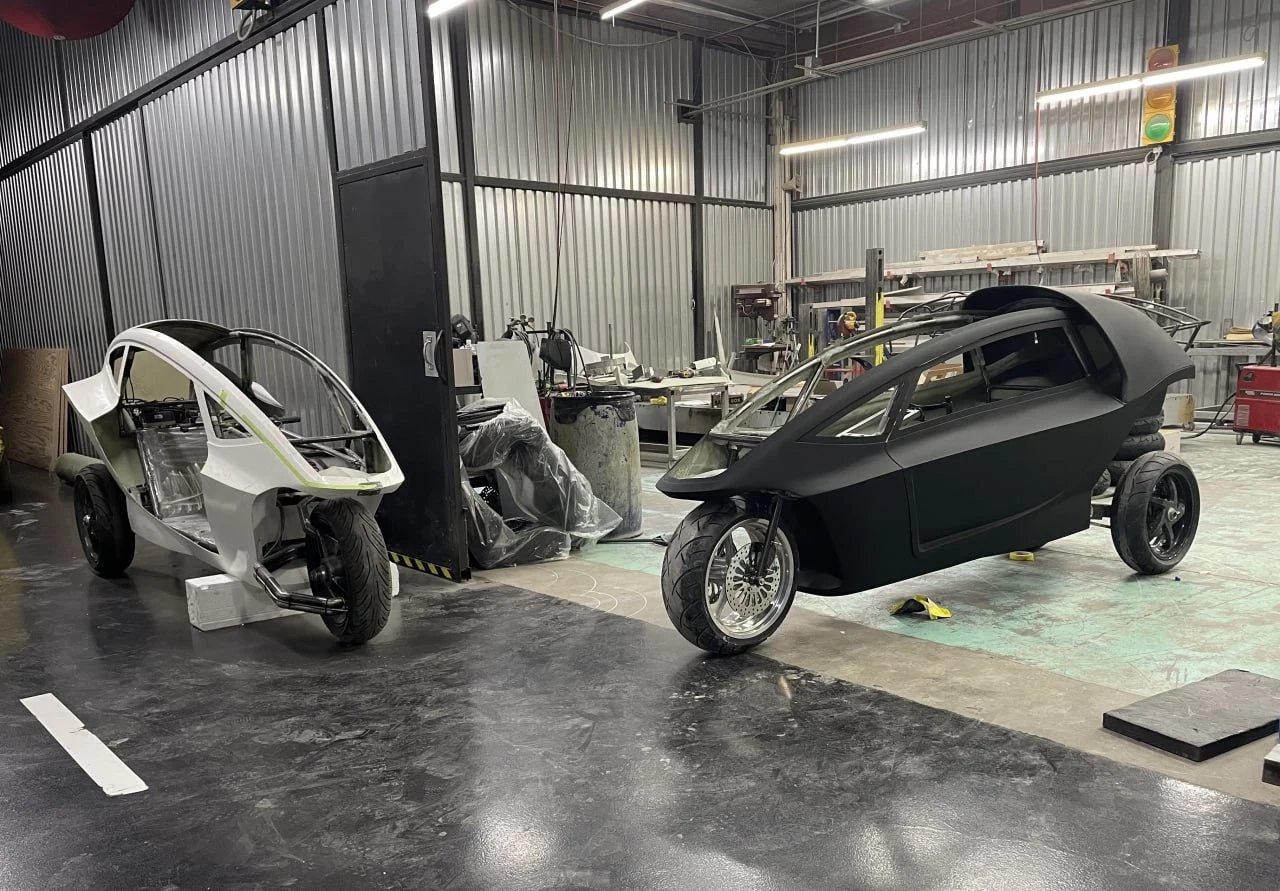
Specifications and dimensions subject to change.
Chapter 01 · Urban Geometry & Parking Footprint
Two Trinova fit in one standard parking space.
Full-width passenger cars occupy an entire lane and an entire parking bay just to carry a single commuter. At roughly 900 mm wide and 2,800 mm long, Trinova uses the road footprint of a motorcycle while enclosing the rider inside a cabin.
Dimensions and specifications subject to change.
Chapter 02 · Mechanical Self-Balancing System
Zero-speed upright stability. No kickstand.
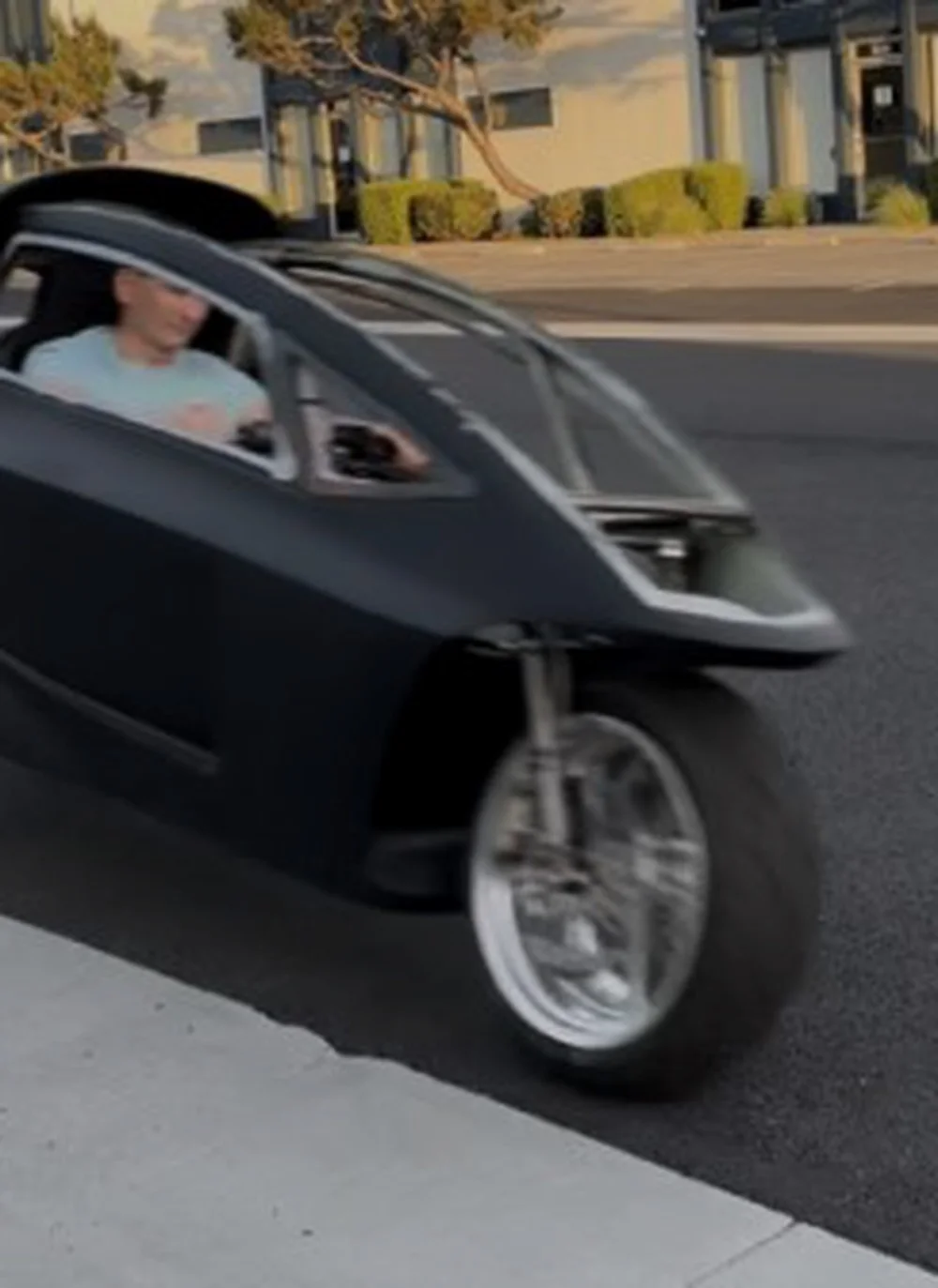
To lean like a motorcycle and still stand up at a red light you need a balance system. Everyone else reached for gyroscopes, hydraulics or active control, and priced themselves out of the market doing it. The Trinova system is mechanical. Filmed on the fourth prototype (2023–25), it won’t fall over when pushed.
Chapter 03 · Cockpit, Canopy & Tandem Seating
Enclosed cabin architecture. Rear-hinged doors. Two seats in tandem.
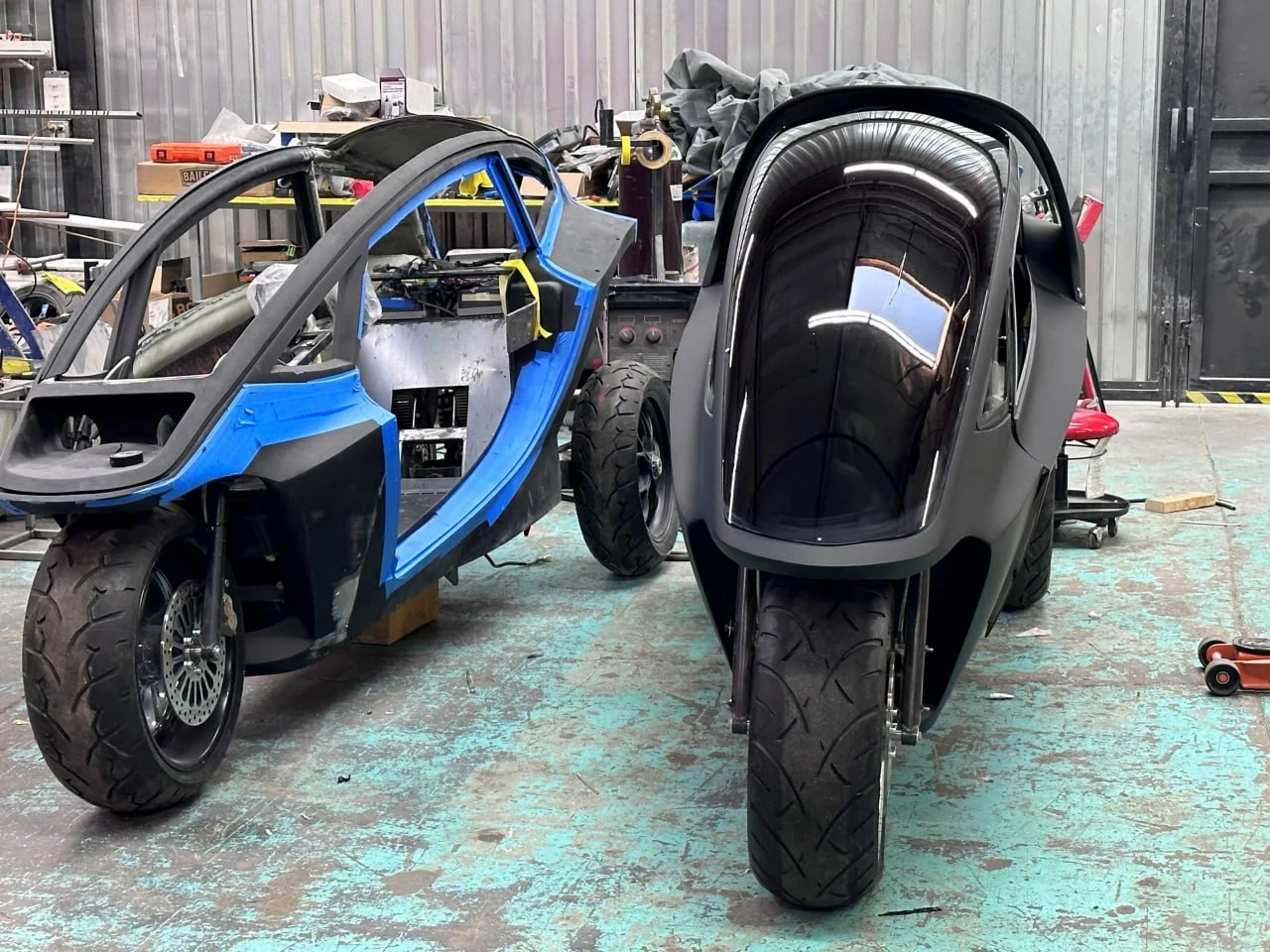
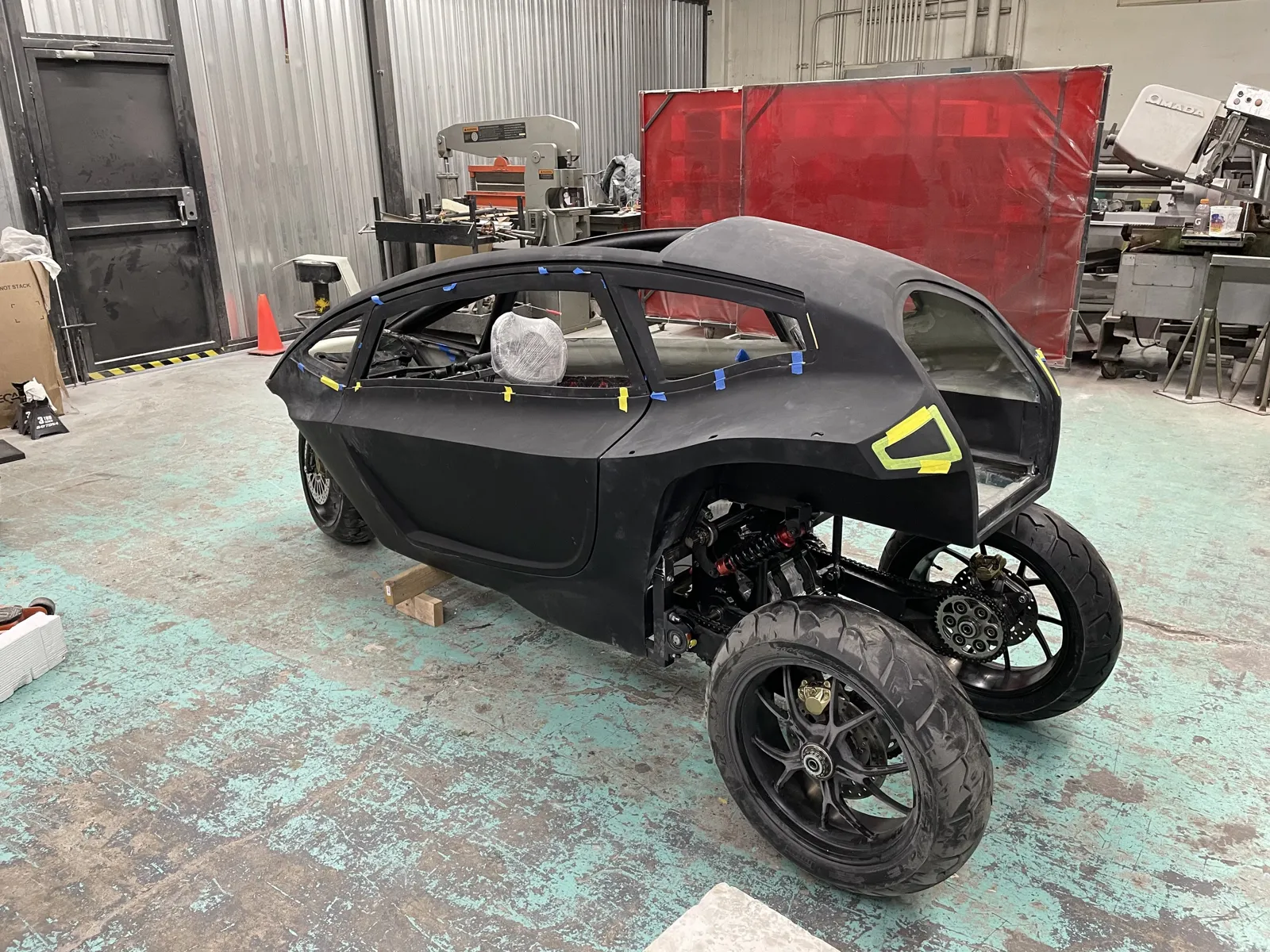
Trinova packages two seats in tandem within an ~850–900 mm wide cabin, accessed through rear-hinged (suicide) doors with sliding side windows and a removable canopy. The fourth prototype (2023–25) used an enclosed composite body; final canopy configuration is subject to pre-production specification.
Removable canopy
Enclosed composite body built on the fourth prototype (2023–25), paired with a removable canopy; final canopy configuration is subject to pre-production specification.
Rear-hinged (suicide) doors with sliding side windows
Rear-hinged (suicide) doors with sliding side windows provide side entry into the ~850–900 mm wide cabin.
Two seats in tandem
Two seats in tandem as standard, or Trinova SCI, where a purpose-built wheelchair docks directly into the driving position without transferring, available upon request in the Founder Series (subject to final engineering review and confirmation in the purchase agreement).
Cabin features and specifications subject to change.
Chapter 04 · Electric Powertrain
Axial-flux electric drive.
The 25 individually numbered Founder Series vehicles feature the EMRAX 228 dual-motor powertrain and a 15 kWh battery pack. Production models are planned to follow using EMRAX 208 / 188 electric drive, with production targets from $18,000 [target, subject to change].
$35,000 · EMRAX 228 dual-motor (Founder Series)
Limited to 25 individually numbered vehicles (No. 01 – No. 25), built to order in Southern California, featuring the EMRAX 228 dual-motor powertrain and equipped with a 15 kWh battery pack. Before payment, buyers receive a written purchase agreement; cancellation and refund rights will be governed by the signed purchase agreement.
Production targets from $18,000 [target, subject to change]
Production models are planned to follow the Founder Series using EMRAX 208 / 188 electric drive. This $250 payment is a fully refundable deposit that reserves your place in the Trinova production queue. It is not a final purchase of a vehicle. This deposit does not guarantee delivery of a vehicle. Trinova reserves the right to modify or cancel the project at any time. In such a case, all deposits will be refunded. All pre-order funds are held in a secure account and will be refunded if requested. Fully refundable anytime before completing a purchase agreement.
Powertrain specifications, prices, and timing subject to change.
Development status and performance figures.
Range, top speed, and acceleration figures are not published while Trinova remains in development; final specifications may change as engineering, testing, and compliance work progress.
Chapter 05 · Market Landscape
The three-wheelers people know.
Open three-wheelers take up a full car lane, while earlier micro-commuters halted production. None combine an enclosed leaning cabin, zero-speed upright stability, and a purpose-built wheelchair that docks directly into the driving position.
| Capability | Trinova | Can-Am | Carver | Arcimoto |
|---|---|---|---|---|
| Leans into corners | Yes | No | Yes | No |
| Fully enclosed cabin | Yes | No | Yes | Partial |
| Balances itself at a stop | Yes | n/a | No | n/a |
| Motorcycle footprint | Yes | No | No | No |
| Purpose-built wheelchair docks in, no transfer | Yes | No | No | No |
| Currently in production | Not yet | Yes | Halted ’24 | Halted ’23 |
Specifications, features, and regulatory classifications subject to change.
Chapter 06 · Technical Datasheet & Classification
Specifications and regulatory path.
Pre-production target and Founder Series specifications. Trinova remains in development, and final specifications may change as engineering, testing, and compliance work progress.
- Overall Width
- ~850–900 mm
- Wheelbase
- 2,500 mm
- Overall Length
- ~2,800 mm
- Parking Footprint
- Two Trinova fit in one standard parking space
- Body / Cabin
- Enclosed cabin architecture with removable canopy (final configuration subject to pre-production specification)
- Doors
- Rear-hinged (suicide) doors with sliding side windows
- Configurations
- Two-seat tandem commuter or Trinova SCI (purpose-built wheelchair dock, available upon request in the Founder Series, subject to final engineering review and confirmation in the purchase agreement)
- Balance System
- Mechanical · Zero-speed upright stability · No kickstand
- Founder Series Drive
- EMRAX 228 dual-motor (Founder Series) · 15 kWh battery pack (Founder Series) · $35,000 · 25 numbered vehicles
- Production Drive
- EMRAX 208 / 188 · Production targets from $18,000 [target, subject to change]
- Classification
- Registers as a three-wheel motorcycle (49 CFR § 571.3)
Specifications, features, prices, and timing subject to change.
Registers as a three-wheel motorcycle: an existing class, not a new one to petition for.
Under federal NHTSA definition (49 CFR § 571.3 ↗), a motor vehicle with motive power, a seat or saddle for the use of the rider, and not more than three wheels in contact with the ground is classified as a motorcycle, and California registers it under the same class.
Motorcycle licensing and helmet rules vary from state to state.
Reserve your place in the production queue or explore Trinova SCI.
Questions on specifications, classification, or the 25 numbered Founder Series vehicles go directly to info@trinovaev.com.
