
Radio-Controlled Balance Model
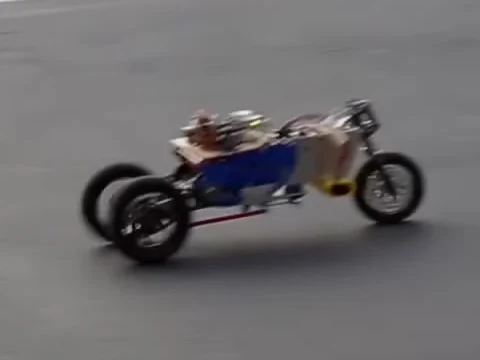
The RC proved the balance system could work. Built in 2012 in Markus Scholten’s garage, this radio-controlled three-wheel scale model tested the balance system before full-size prototype builds began.
Origin · In 2012 · Interstate 405
In 2012, automotive engineer Markus Scholten was crawling along Interstate 405 after a job interview when years of sketching a tilting three-wheeler turned into a garage build. Over the next decade and more, he built and road-tested four generations of prototypes out of pocket in Southern California.
“The spark started back in the ’80s when I first saw the ‘Lean Machine.’ Over the years I sketched and refined concepts, but in 2012, the idea really took hold. Fisker Automotive had collapsed, I was crawling along the 405 after a Tesla interview, and the frustration of traffic hit me harder than ever. When I got home, my wife asked how it went. I told her, ‘If I get the job, I’m getting a bike.’ Her reply? ‘Forget the job, buddy… why don’t you just build the bike you’ve been designing? Then you’ll get to any job as fast as on a bike, only way safer.’”
Chapter 01 · Shop Build Sequence (2012–2025)
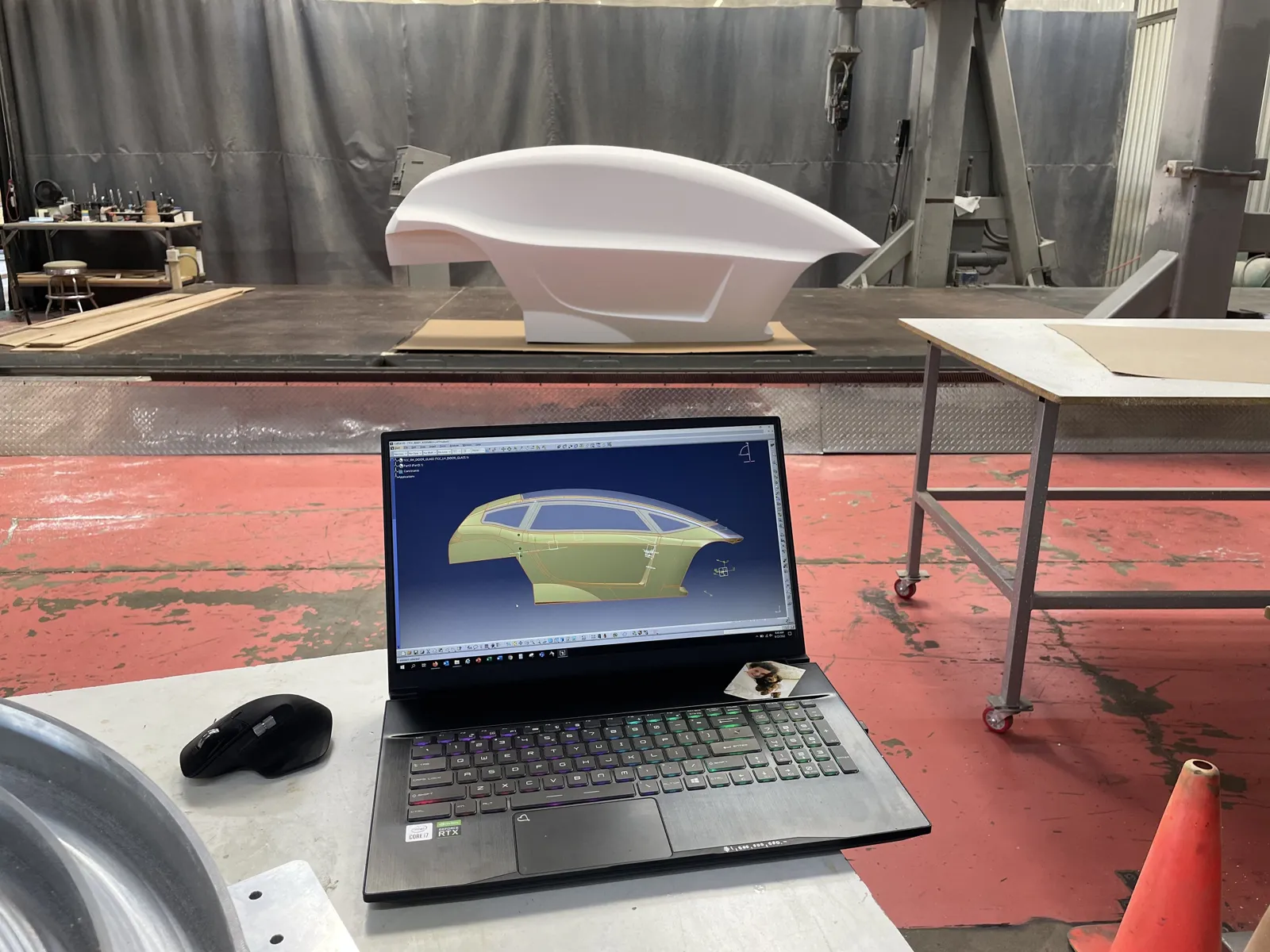
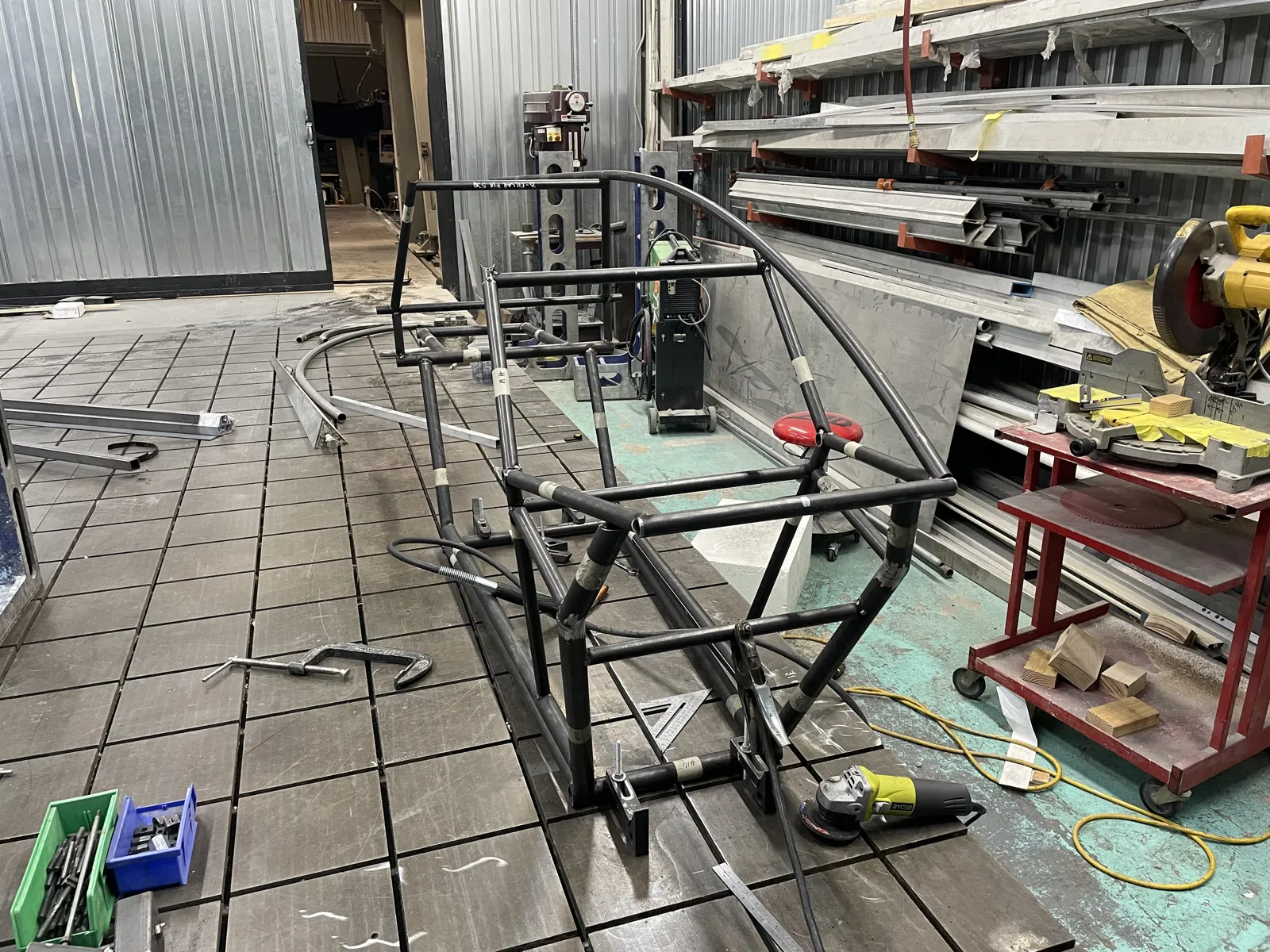
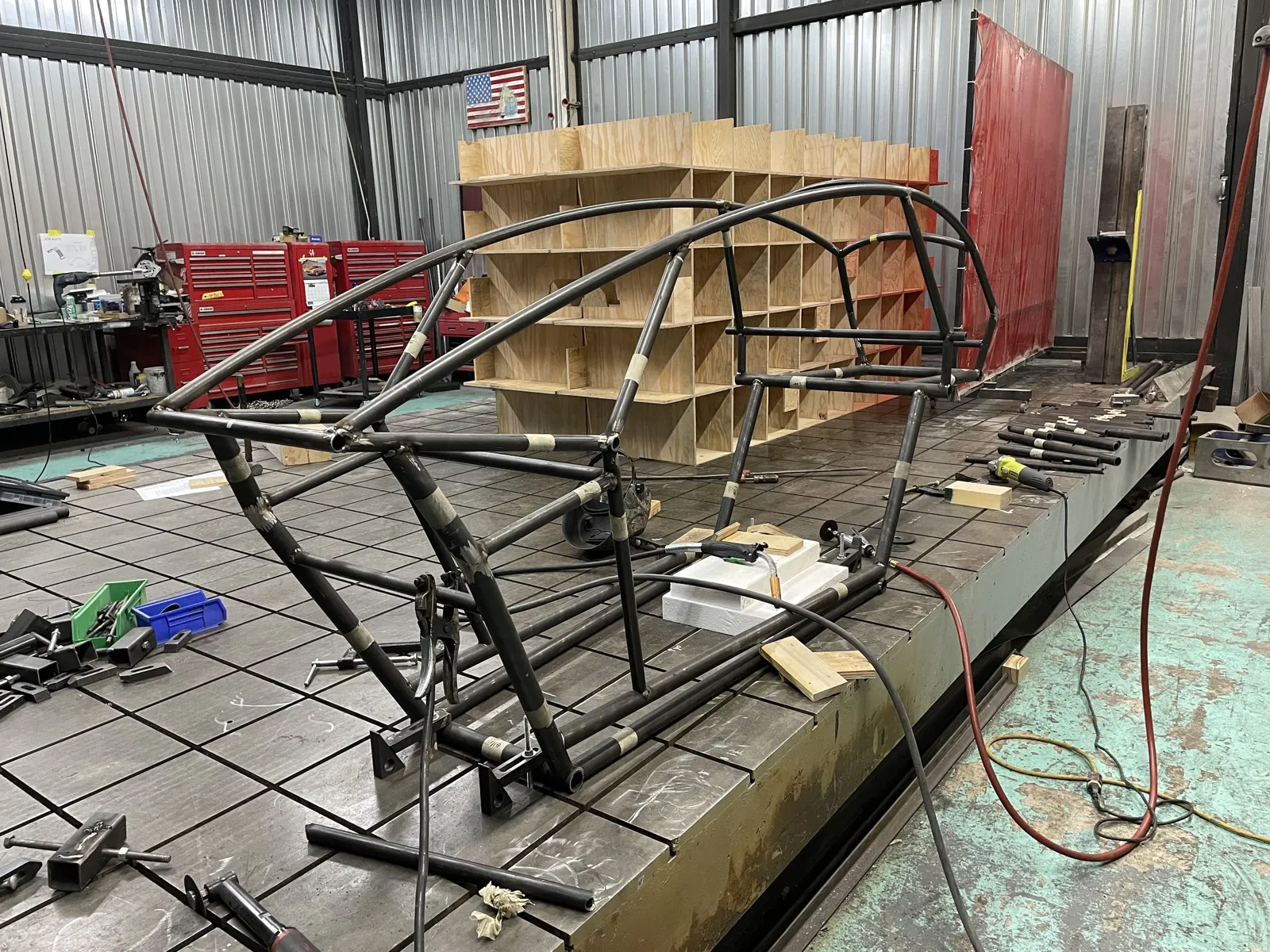
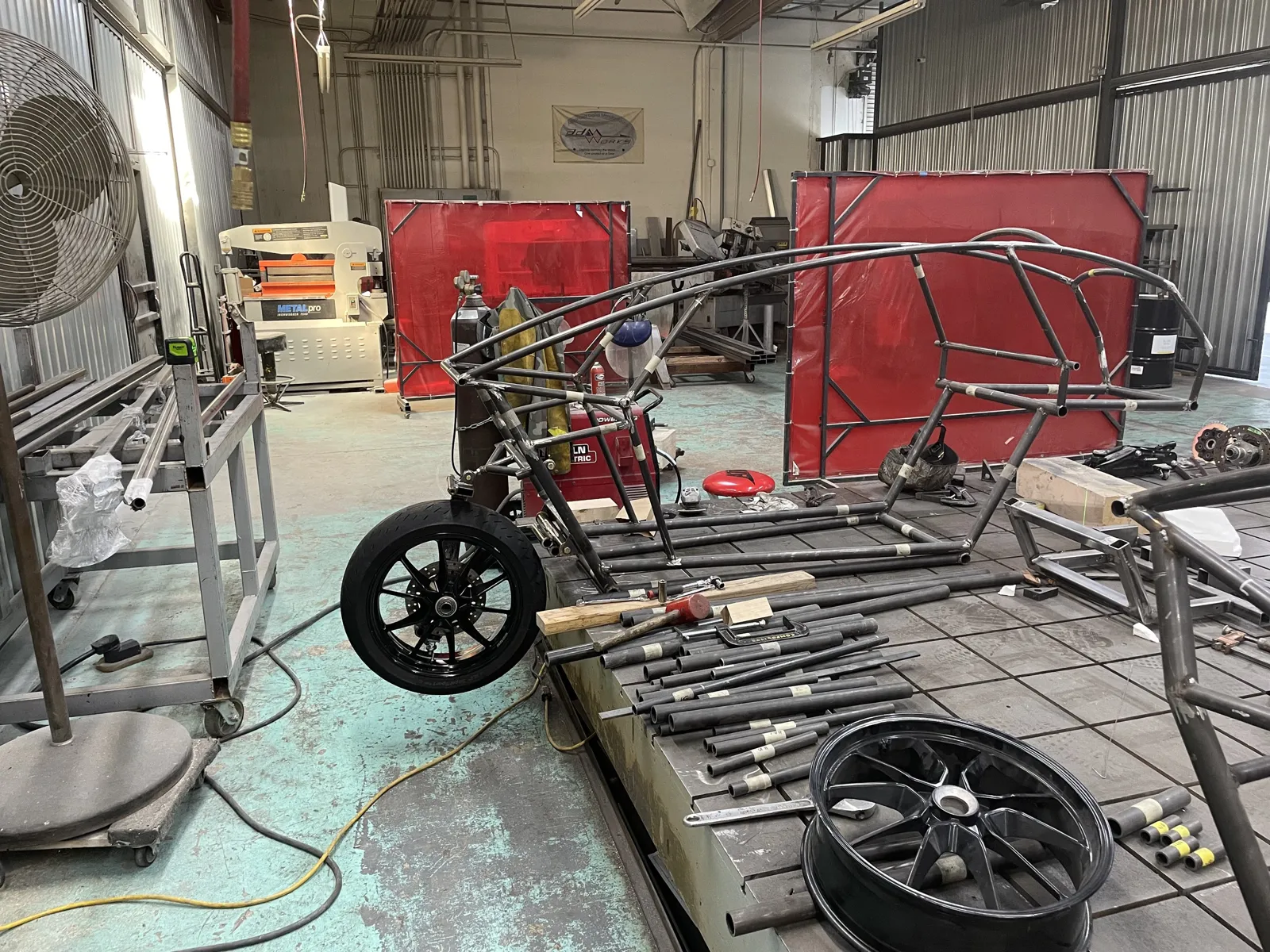
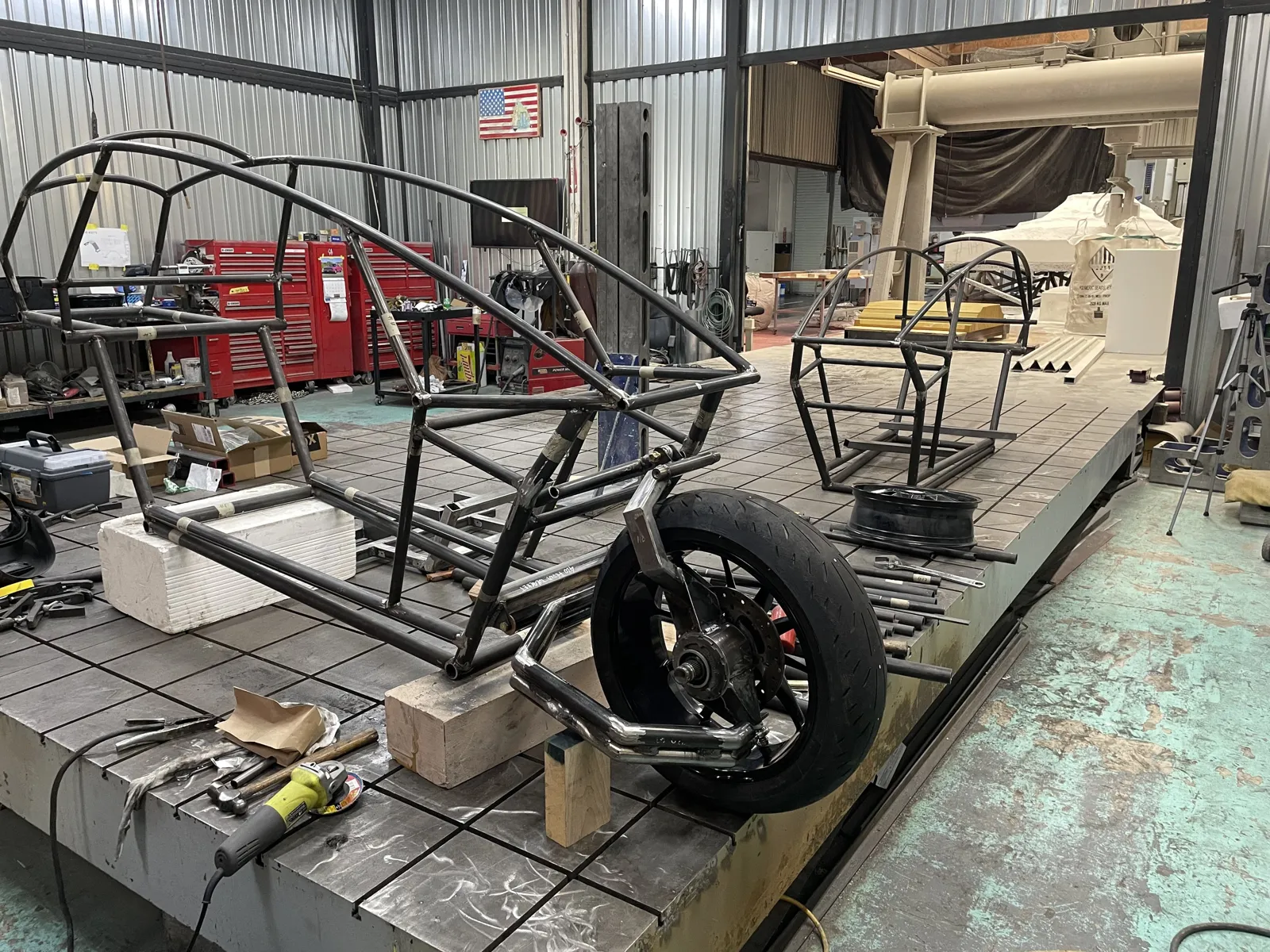
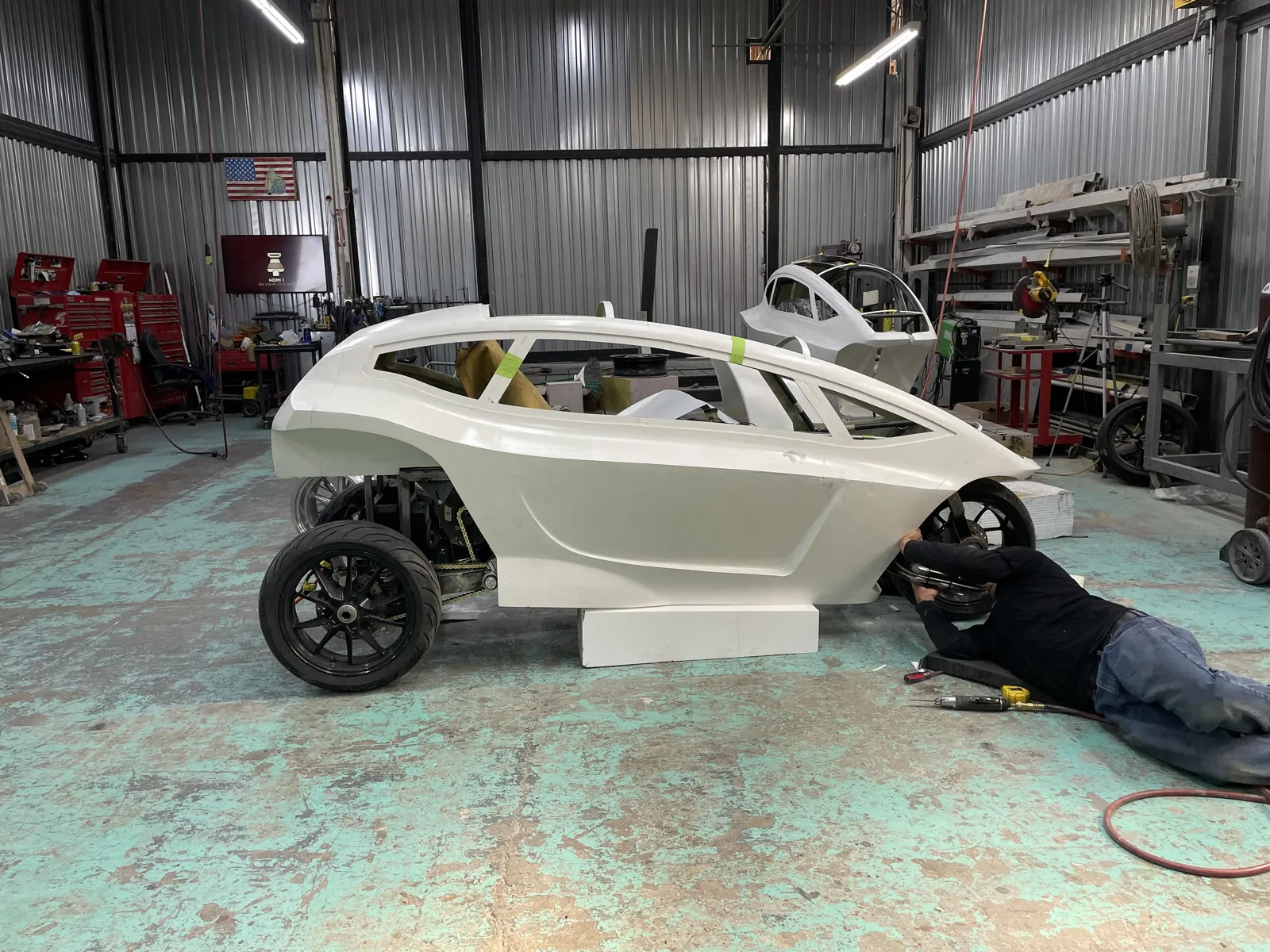
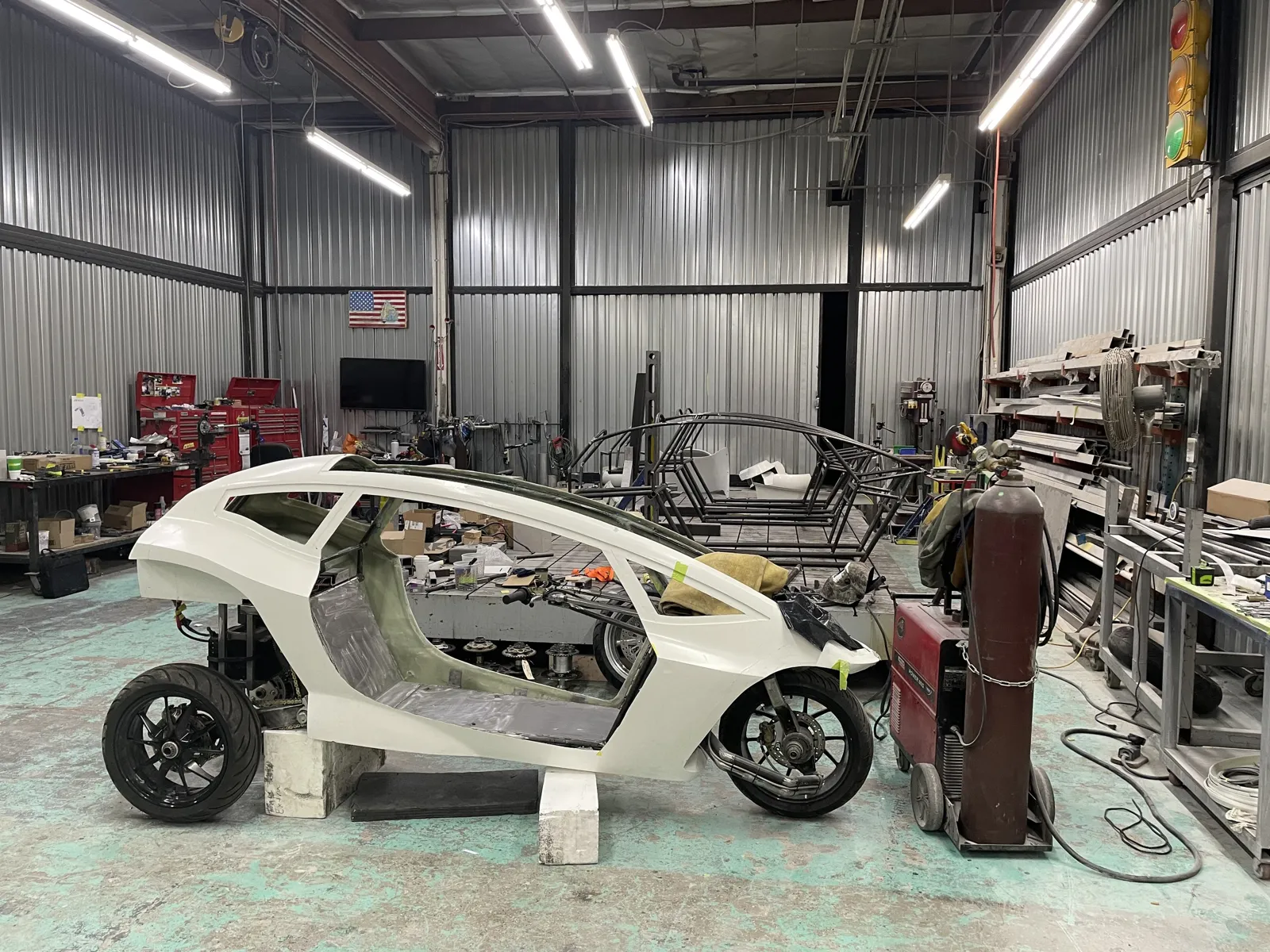
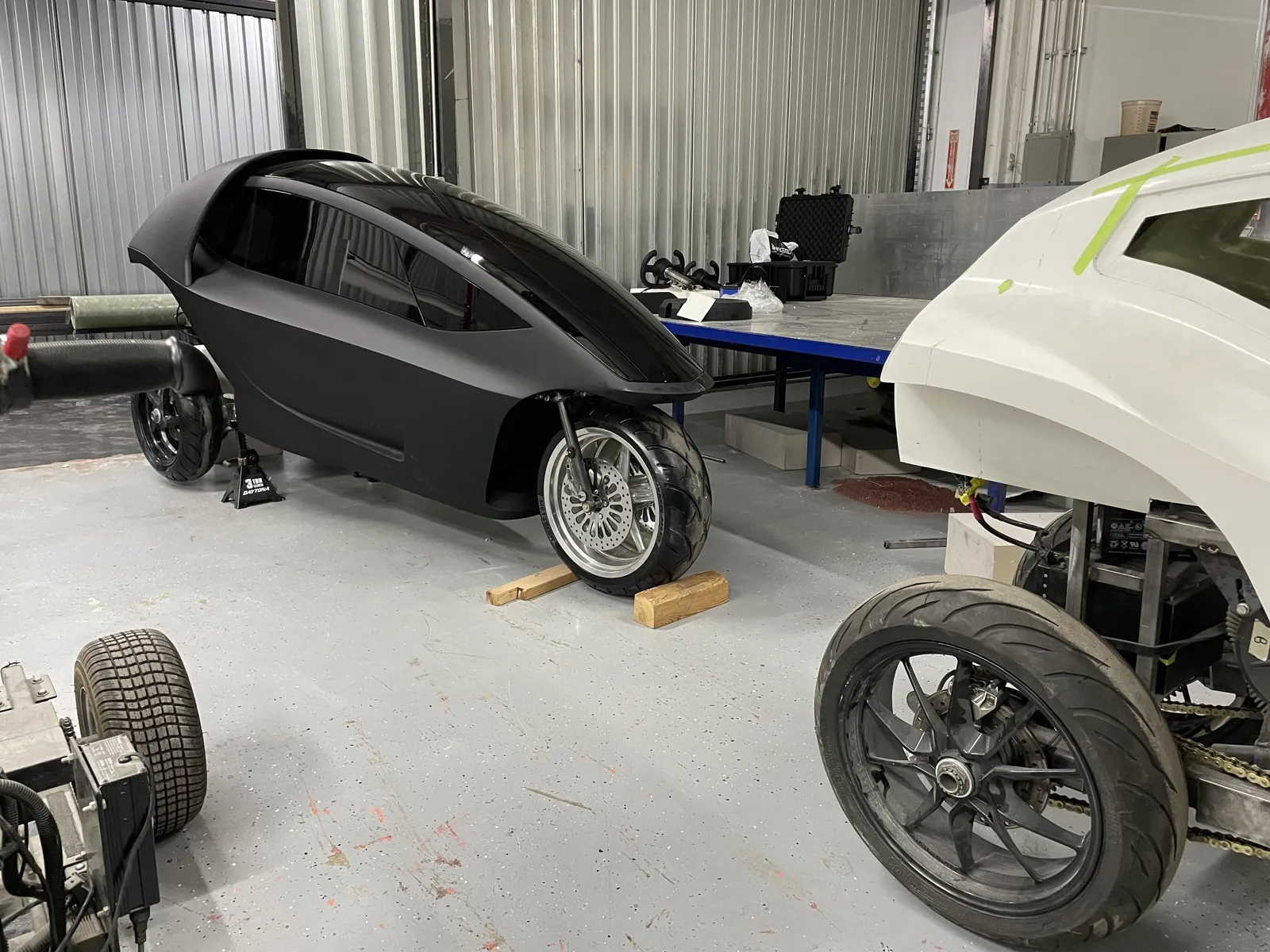
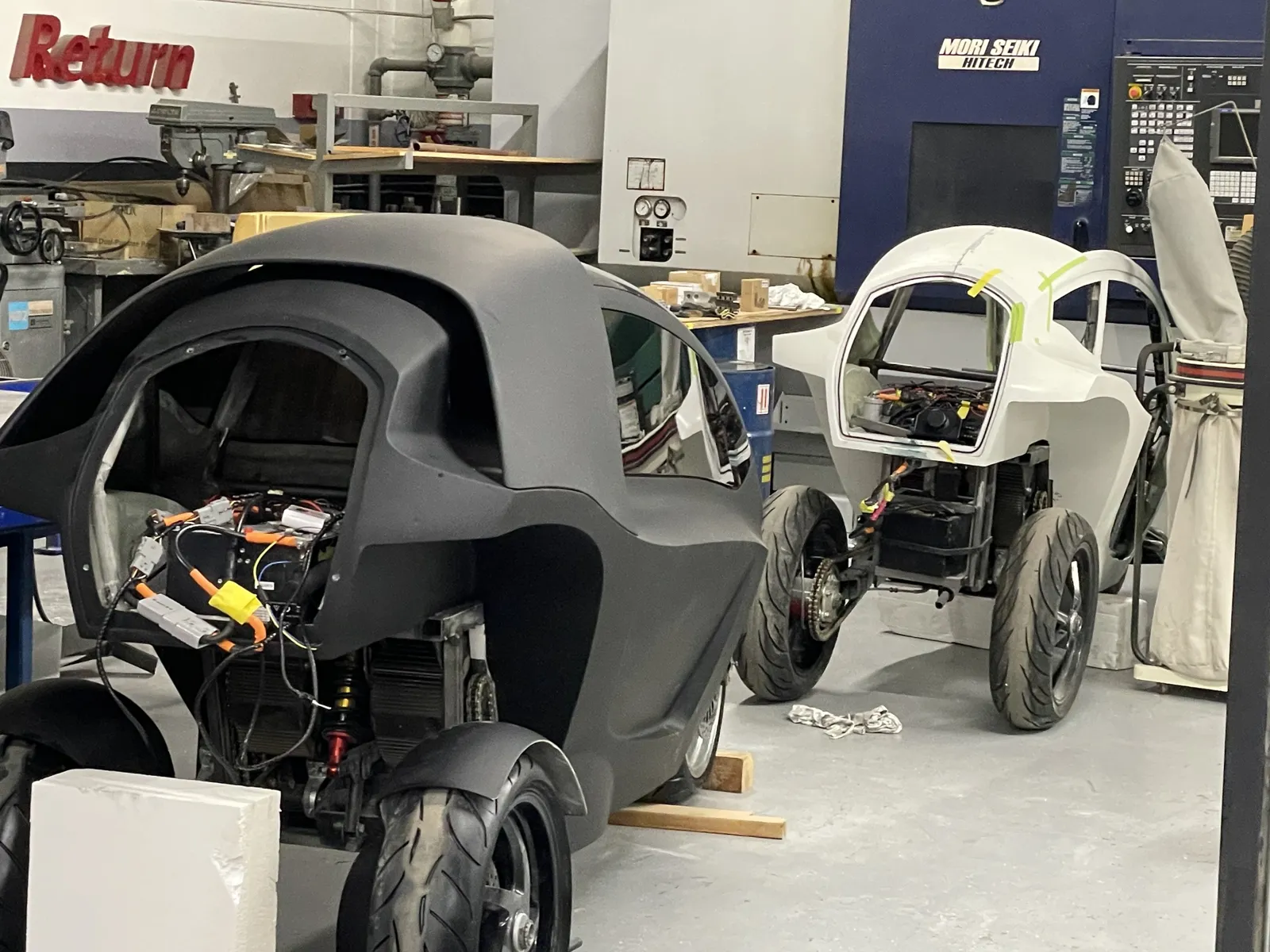
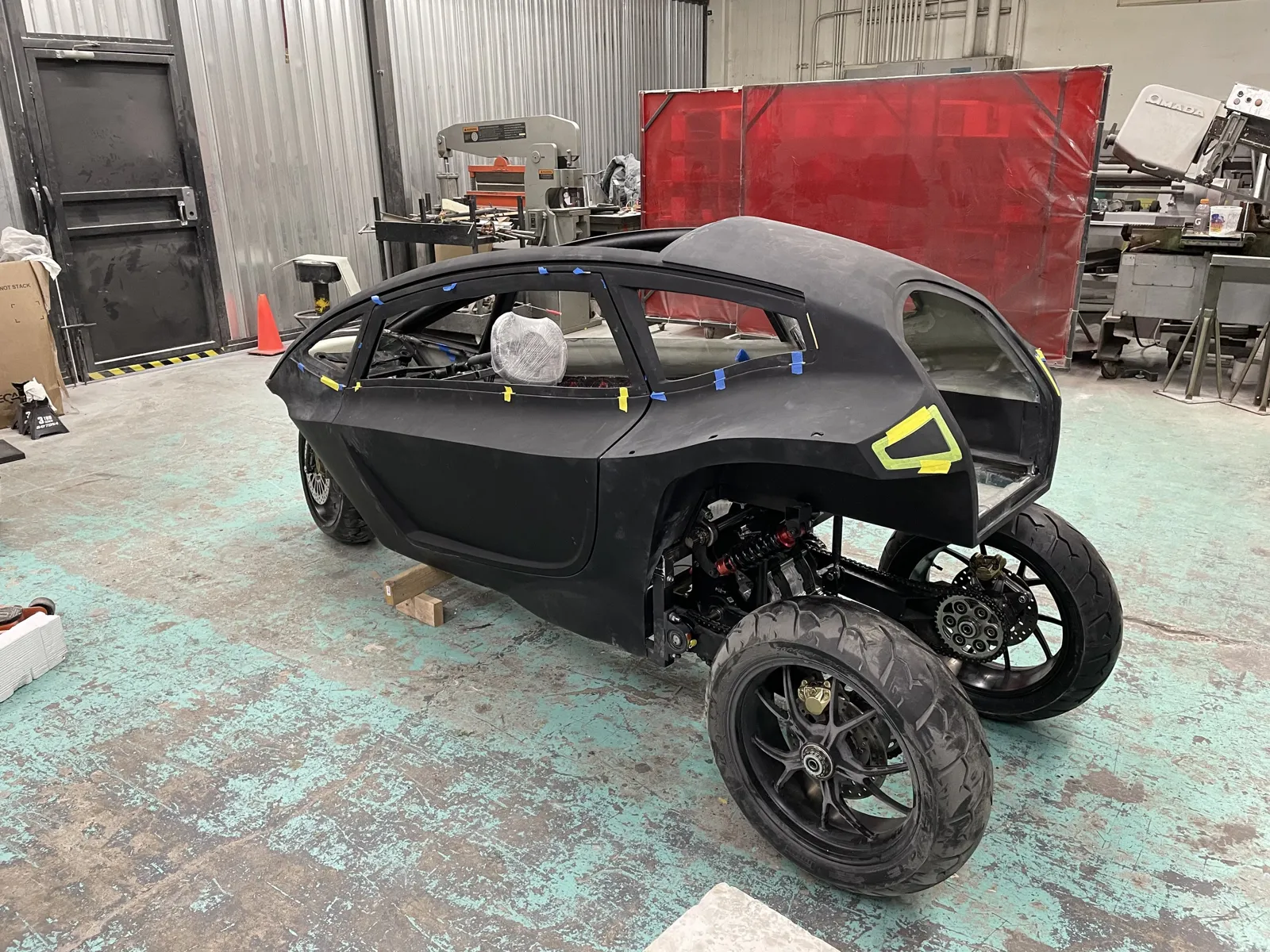
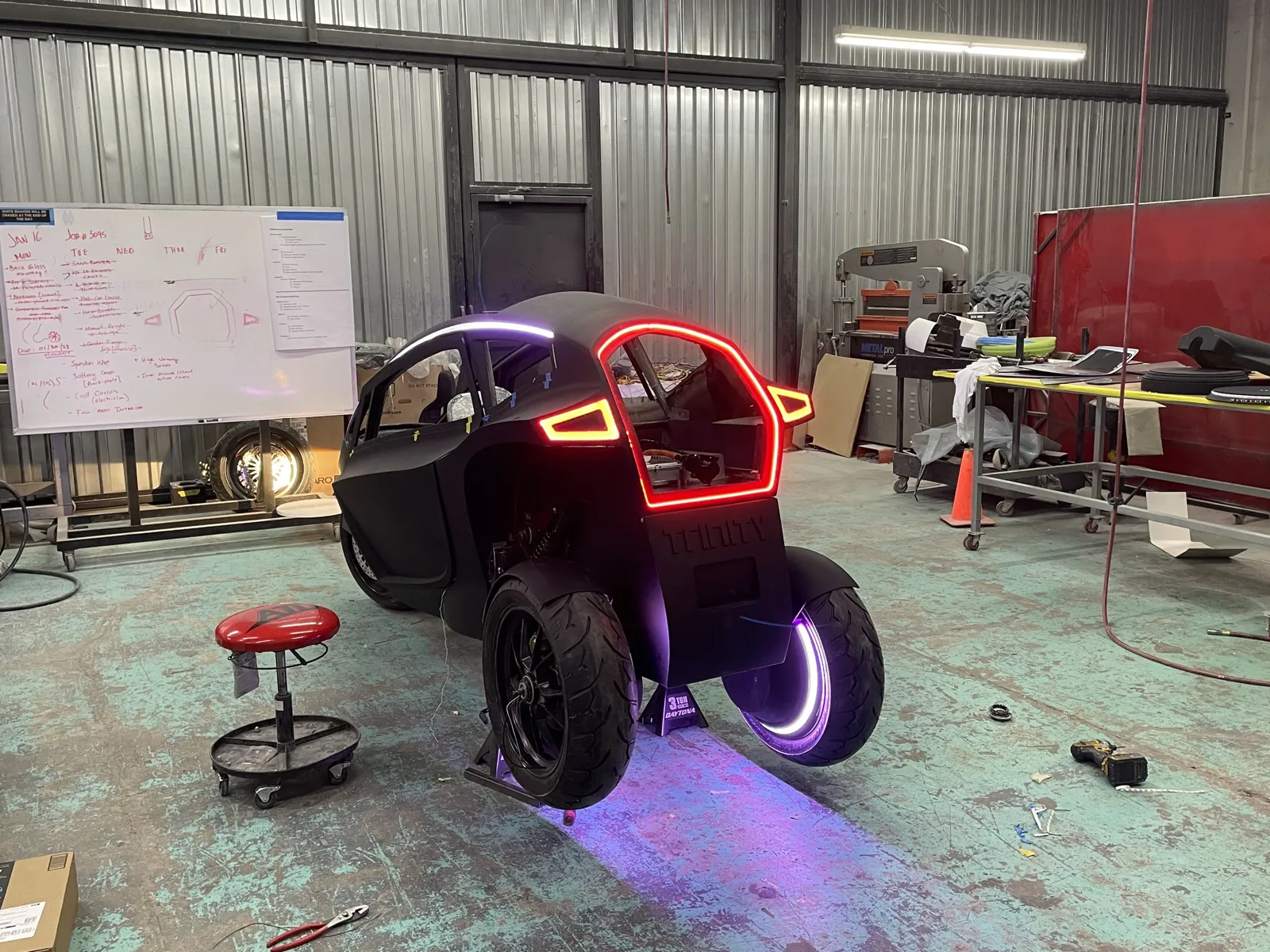
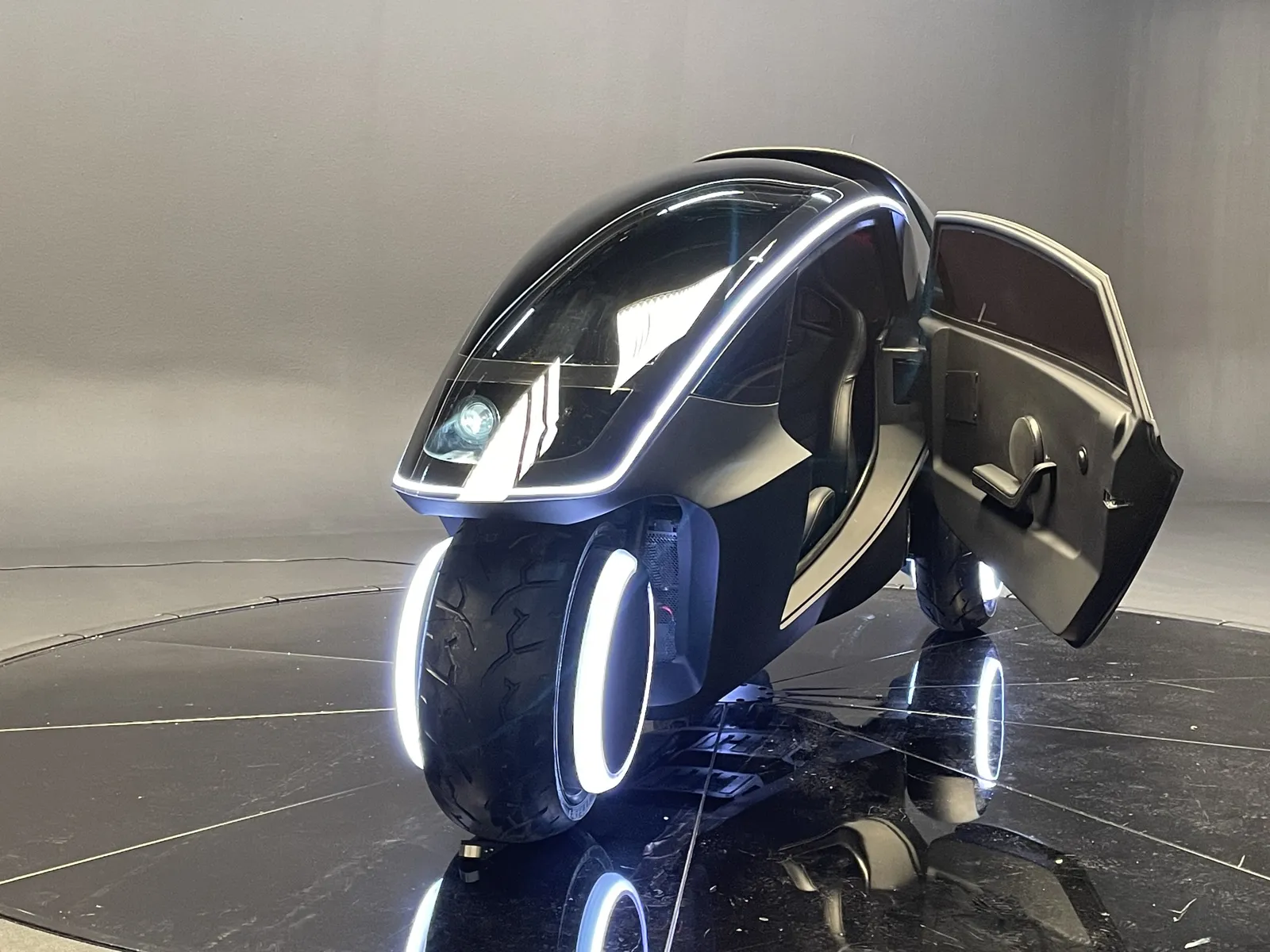
Scrub through twelve shop and studio build photographs from the 2012–2025 prototypes, from CAD surface data and fixture-table welding in the Southern California shop to composite body fitment, wiring, lighting, and studio photography of the fourth prototype (2023–25). Click any frame to inspect it in the viewer.
Chapter 02 · Hardware Chronology (2012–2025)
From a radio-controlled model in 2012, to the full-scale combustion-powered Alpha One in 2013–16, an electric-drive conversion in 2020–22, and the enclosed fourth prototype filmed on public roads in 2023–25, all four generations were built and funded out of pocket in Southern California.
The RC proved the balance system could work. Built in 2012 in Markus Scholten’s garage, this radio-controlled three-wheel scale model tested the balance system before full-size prototype builds began.
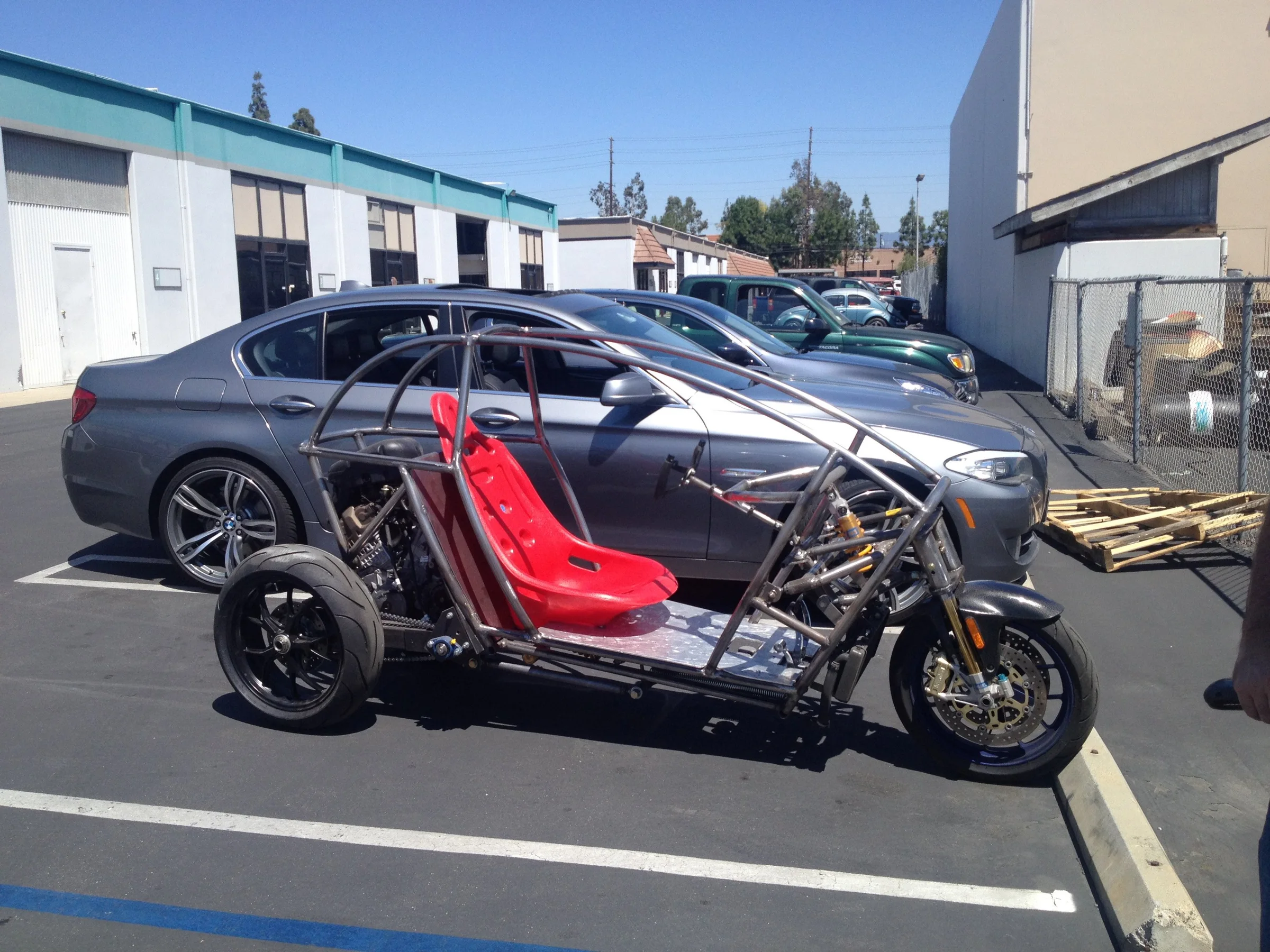
Scale validation and control-arm packaging… proved the system works. Built as a full-scale welded steel-tube prototype (Trinova Alpha One) powered by an Aprilia RSV 1000R engine, it tested the balance and tilting suspension architecture on the road.
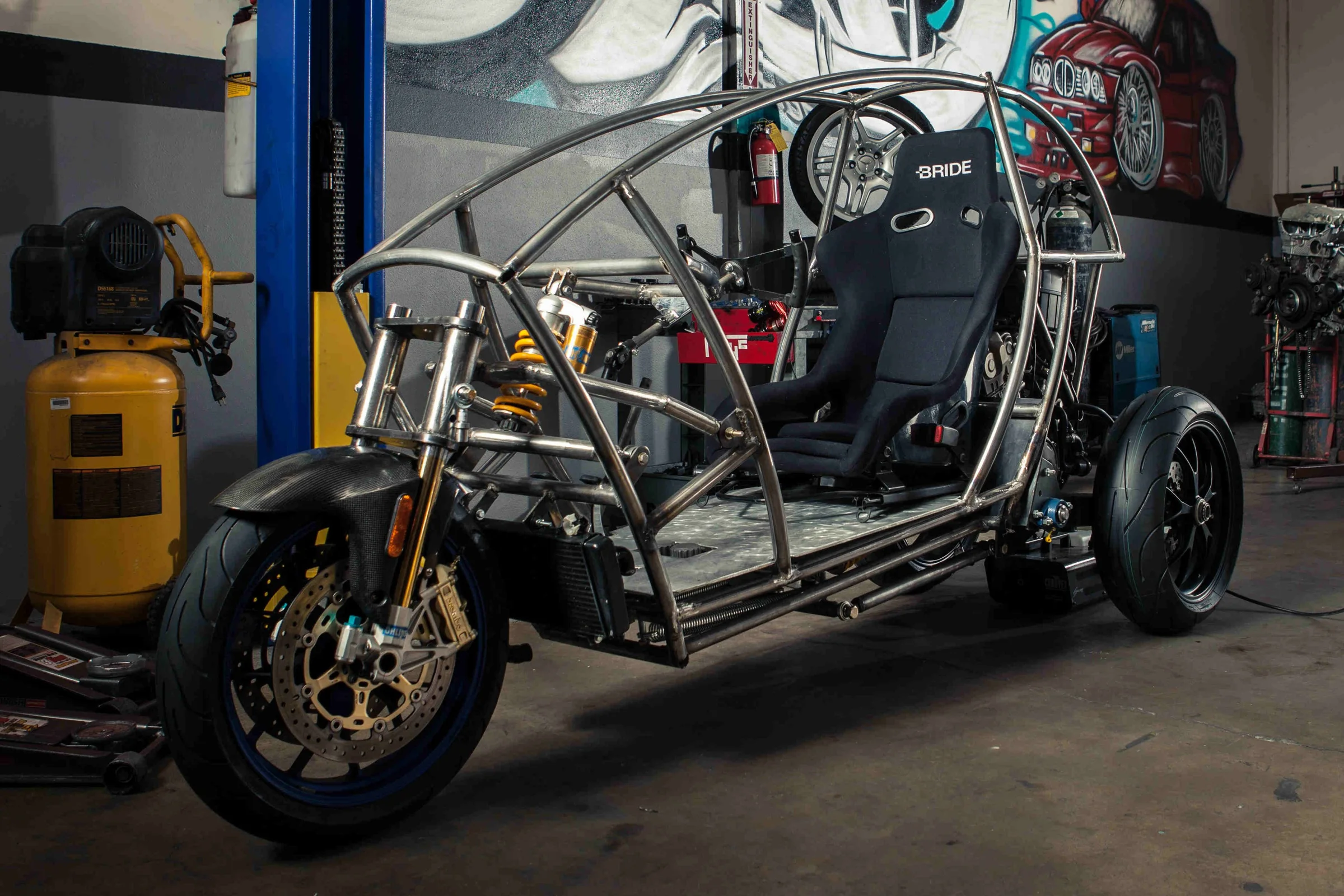
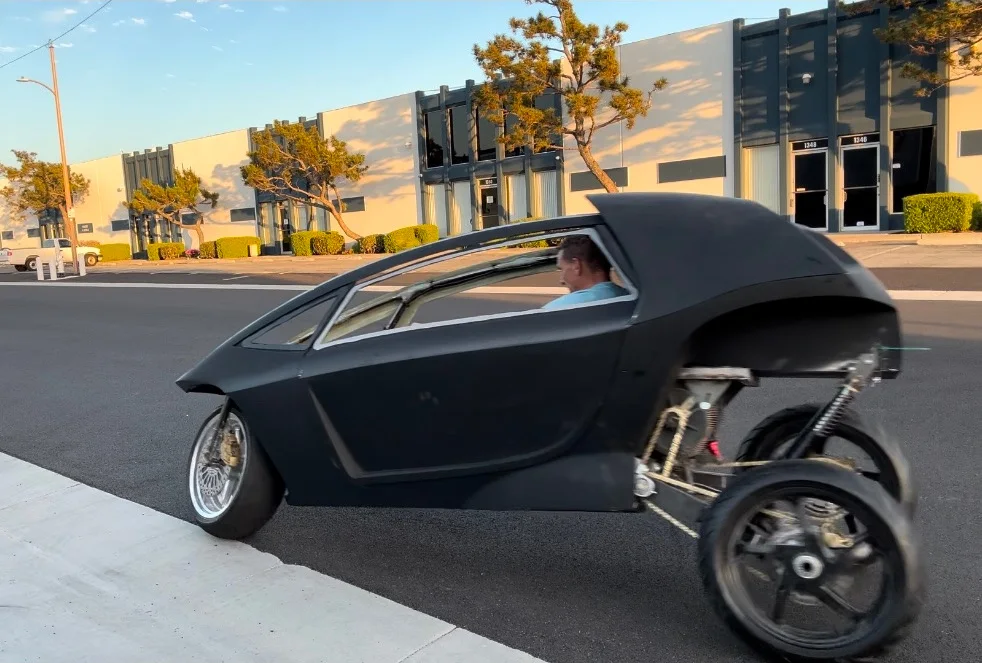
eDrive implemented and tested. Between 2020 and 2022, Trinova transitioned from internal combustion to electric drive and was tested on public roads in Southern California.
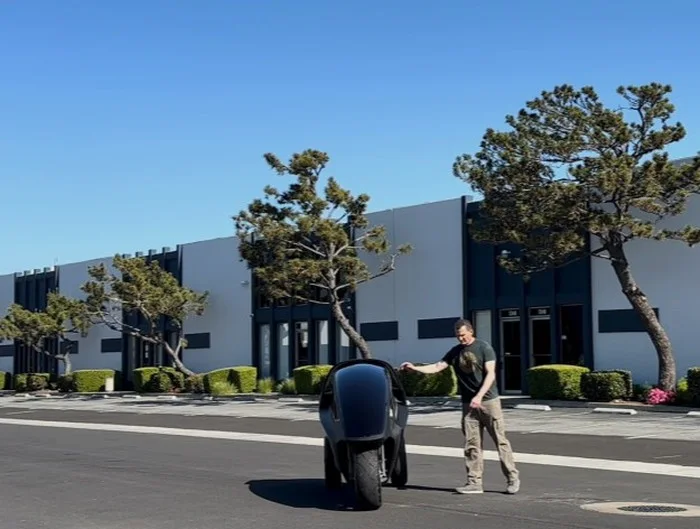
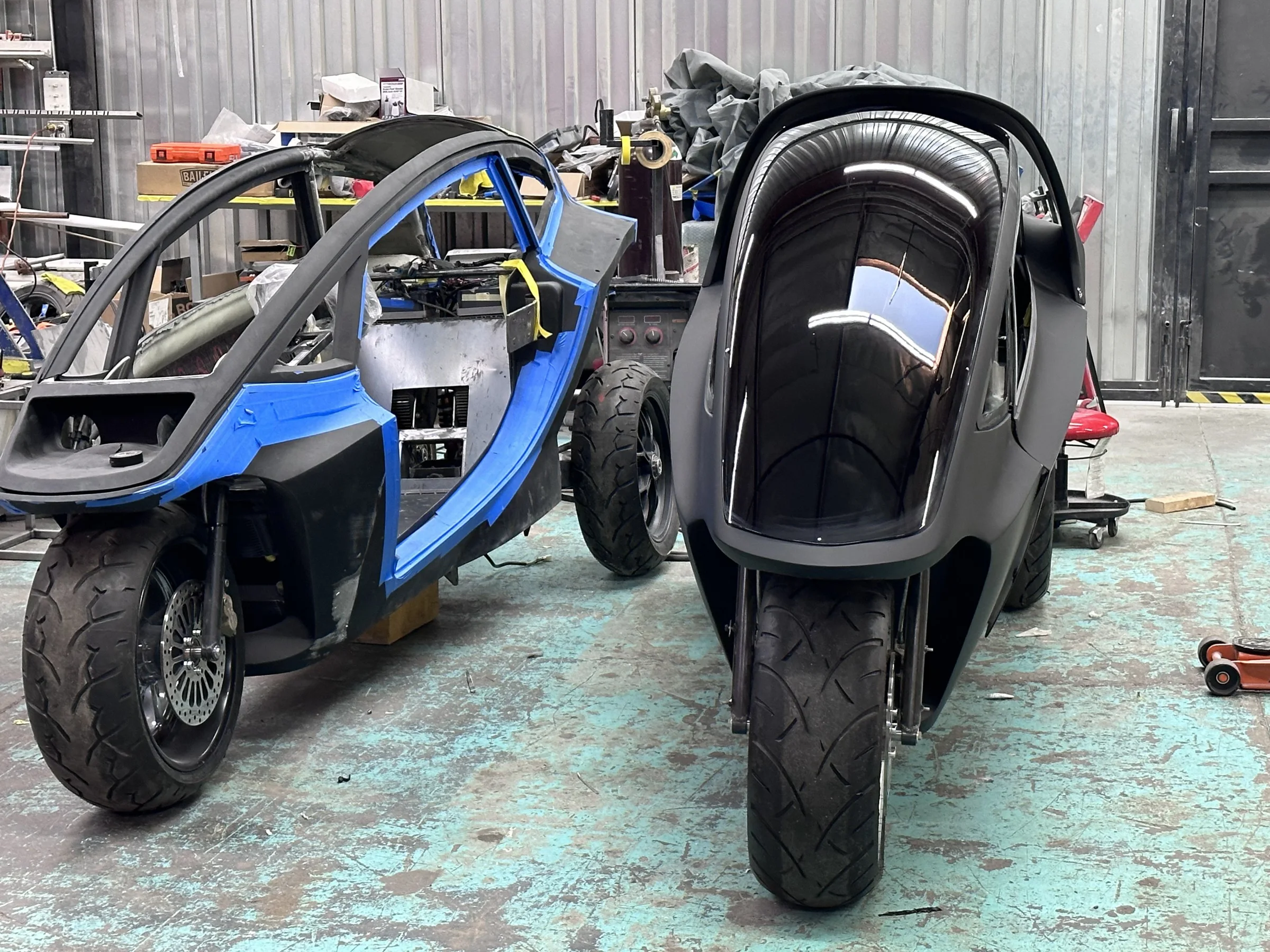
Enclosed body, filmed on public roads, won’t fall over when pushed. Built in the Southern California shop in 2023–25, the enclosed EV builds brought composite bodywork, doors, canopy glazing, lighting, and zero-speed mechanical self-balancing onto public streets.
Chapter 03 · About Markus Scholten
More than 30 years of automotive concept, chassis, convertible roof, and electric-vehicle engineering across Europe and Southern California, beginning at Karmann GmbH in 1996–1997.
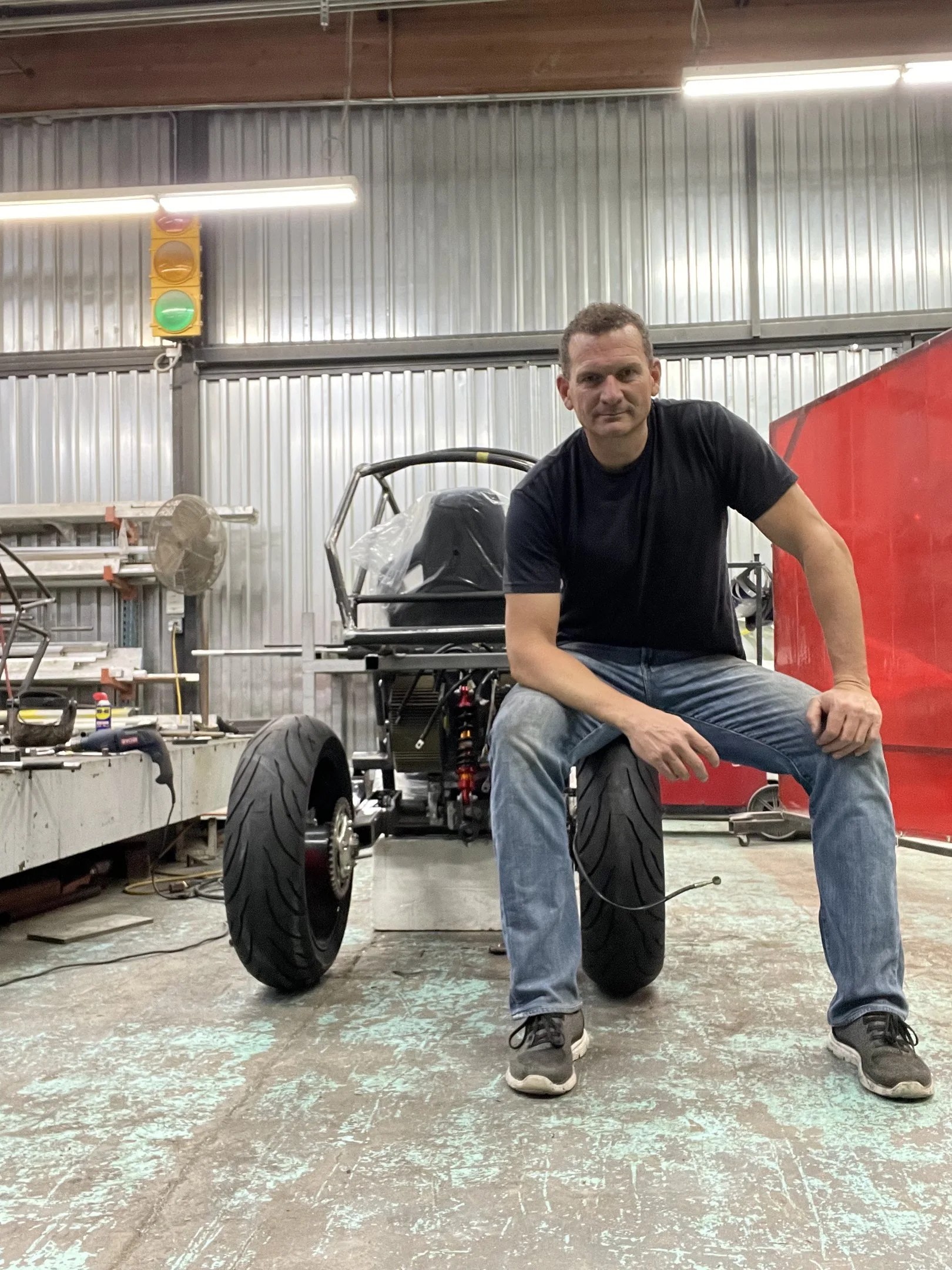
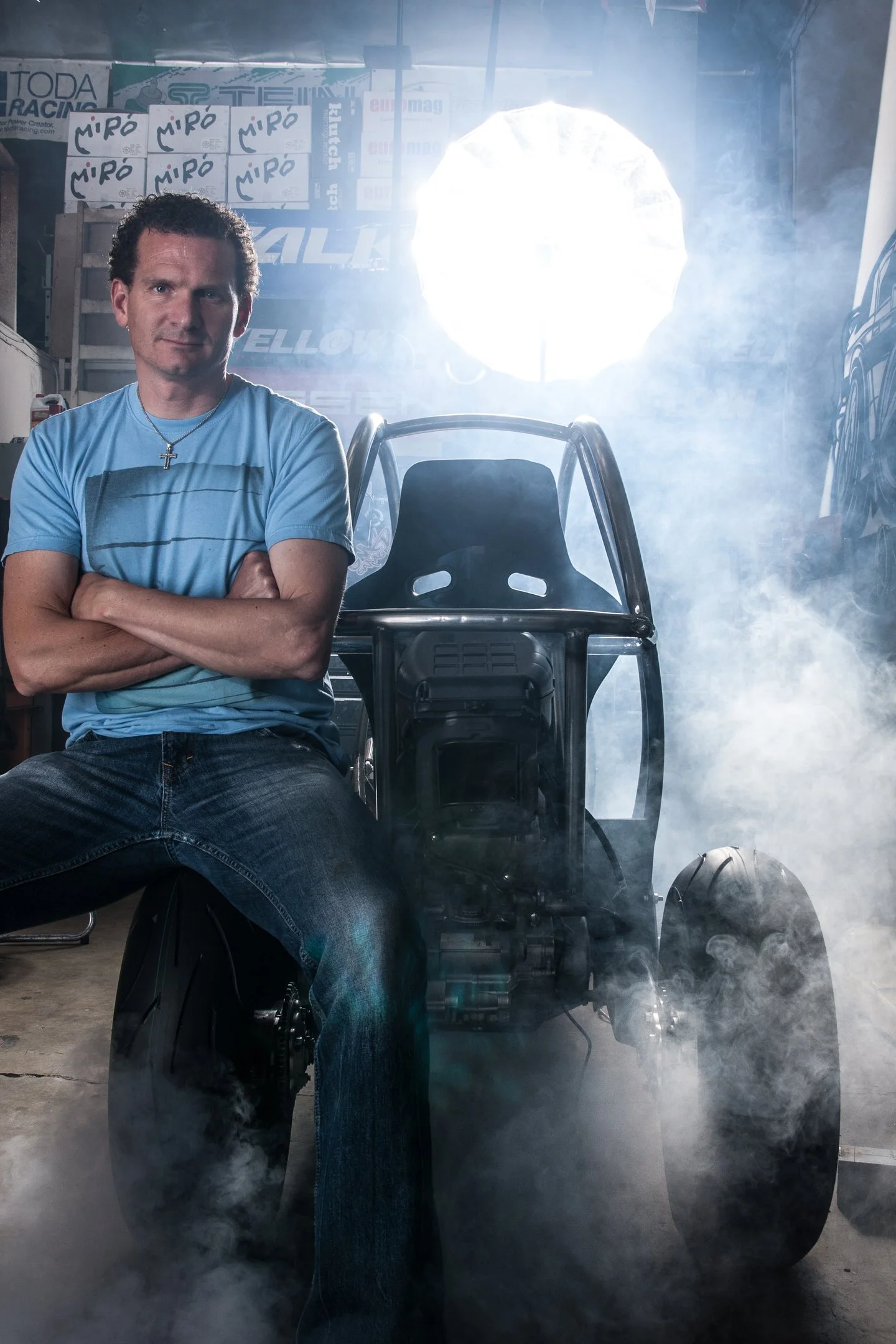
“In 1992, a devastating crash ended my career as a professional cyclist. That accident didn’t just end a dream... it forced me to choose a new path. I turned to my second passion: cars. Not the kind you just drive, but the kind you create from nothing. The kind that solve problems, ignite passion, move people, and make a statement without saying a word.”
Beginning with the BMW 316 K1 project at Karmann GmbH in Osnabrück, Germany in 1996–1997 and continuing in Southern California, Markus Scholten has spent more than 30 years engineering concept vehicles, spaceframes, body structures, retractable hardtops, EV platforms, and one-off builds. His career includes engineering program work on the Fisker Karma, Sunset, and Surf, Aptera front suspension, Nikola One and Two cab engineering, and projects for Karmann, Mercedes-Benz, VW, Ford, and BMW.
He is a named co-inventor on two prior granted US automotive patents on vehicle door and window systems (US 10,077,084 B2 ↗ and US 10,981,609 B2 ↗, assignee Nikola Corp).
Based in Southern California, founder Markus Scholten is developing Trinova EV toward two street-legal pre-production vehicles and the 25 numbered Founder Series builds ($35,000, No. 01 – No. 25), followed by planned series production (Production targets from $18,000 [target, subject to change]).
This $250 payment is a fully refundable deposit that reserves your place in the Trinova production queue. It is not a final purchase of a vehicle. This deposit does not guarantee delivery of a vehicle. Trinova reserves the right to modify or cancel the project at any time. In such a case, all deposits will be refunded. All pre-order funds are held in a secure account and will be refunded if requested. Fully refundable anytime before completing a purchase agreement. Refund requests can be sent to info@trinovaev.com. Founder Series ($35,000): Cancellation and refund rights will be governed by the signed purchase agreement.
Specifications, features, prices, and program timing subject to change.
